
We learned SEO. We learned keywords. We learned backlinks. And for a while, that worked. But today, we don’t just search. We ASK. We ask ChatGPT. We ask Google’s AI. We ask Perplexity. And instead of ten blue links, we get one direct answer. From mastering SEO, the game changed to Answer Engine Optimization (AEO) and Generative Engine Optimization (GEO).

If SEO was about ranking pages, AEO and GEO are about becoming the answer. This post provides a five-phase, scientific playbook to dominate this new era of AI search— not with hacks, not with theory, but with a clear system.
Phase 1: The “Plumbing” — Your Technical Foundation
Goal: Ensure AI bots can read and understand your site.
Can the AI even read your website?
“If the answer is “no” or “not properly,” then nothing else in AEO or GEO matters. You can have the best content in the world, and it still won’t show up in answers”
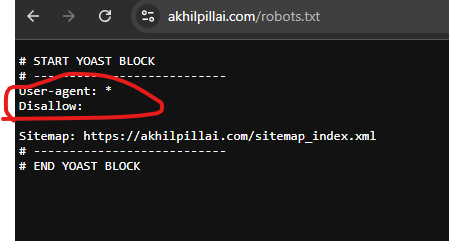
Step 1: The robots.txt Audit
- The Science: A study of 140 million sites revealed that nearly 6% accidentally block OpenAI’s bot. You might be invisible to the primary tool you’re trying to rank on.
- The Action: Go to
yourdomain.com/robots.txt. Look forUser-agent: GPTBotorUser-agent: CCBot. If it saysDisallow: /, you are telling the AI to leave. Delete that line immediately. You must explicitly allow these bots to crawl your site.
Step 2: HTML “Tree Walking” Formatting
AI does not read your page like a human.
It scans your HTML from top to bottom and tries to break the page into small, meaningful sections. Think of it like someone quickly skimming and highlighting parts that look important.
If your page is one long wall of text, the AI struggles to understand:
- What is pricing?
- What is features?
- What is explanation?
- What is just story?
Bad example:
One 500-word paragraph mixing:
- Your product story
- Your features
- Your pricing
- Your benefits
To a human, it may still make sense. To an AI, it’s messy.
Good example:
- A clear heading: Pricing
Then short points or a small paragraph. - Another clear heading: Features
Then short explanations. - Another heading: Who this is for
Then a simple description.
What to do:
- Open your top 10 most important pages
- Check:
- Are there clear headings?
- Are paragraphs short and focused?
- Is each section about one idea only?
This helps AI “chunk” your content correctly, which directly improves your chances in AEO and GEO.
Step 3: Schema Markup for Structure
If you write:
“This plan costs $50”
The AI sees “50” as just a number in a sentence.
It does not guarantee it understands:
- Is this a price?
- Is this a discount?
- Is this an ID number?
- Is this per month or one-time?
Schema markup is just a way of adding labels to your content.
- The Science: LLMs struggle to differentiate a price from a product ID in a block of text. Schema markup is code that tells bots what your data means.
- The Action: Implement
Productschema on your product pages. It’s about telling the bot what that number represents. - Specific Example: Instead of just text, the code should explicitly tell the bot:
{
“@context”: “https://schema.org/”,
“@type”: “Product”,
“name”: “The Nomad Growth Kit”,
“offers”: {
“@type”: “Offer”,
“price”: “50.00”,
“priceCurrency”: “USD”,
“availability”: “https://schema.org/InStock”
}}
What to do:
- Add:
- Product schema to product pages
- FAQ schema to FAQ pages
- Article schema to blog posts
This is one of the most underused but most powerful AEO and GEO basics.
Phase 2: The “Input” Strategy — Mining for Conversational Gold
Goal: Stop guessing keywords. Use scientific data to find the “Conversational Long Tail” that your customers are actually using.
Marketing tools show you what people search.
Sales calls and support tickets show you what people worry about.
This is the big shift from SEO to AEO and GEO.
In real conversations, people ask things like:
- “Will this work with our old system or do we need to change everything?”
- “What breaks if we scale from 5 users to 50?”
- “Why is this more expensive than the other tool?”
These are exactly the kind of questions people now ask AI.
Step 1: Transcribe Sales Conversations
- The Action: Take the last 50 recordings of your sales calls or customer support tickets. Upload the transcripts to an Notebook LLM.
- Prompt to Use:“Analyze these transcripts. List the top 20 specific questions customers asked about our product’s limitations, integrations, or pricing. Output them as natural language questions a person would ask an AI assistant.”
Step 2: Competitor Paid Search Reverse-Engineering
Your competitors are already telling you what makes money.
Every time they run Google Ads, they are paying for high-intent searches.
Those searches are not random. They are the closest thing to “buyer questions”.
- The Science: You can reverse-engineer Competitor Ads into the questions that lead to a purchase.
- The Action: List the top 10 keywords your biggest competitor bids on (e.g., “best payroll software”).
- Scenario:
- Now take one keyword and ask an LLM:
“If someone searches for ‘best payroll software’, what are 20 very specific, real-world questions they might ask an AI before choosing one?” - You’ll get things like:
- “Which payroll software works in India and handles PF and GST?”
- “Which payroll tool is easiest for a company with less than 10 employees?”
- “Which payroll software integrates with Looker or Zapier?”
- Now compare this with what most websites do.
- We should not optimise for:
“Payroll software”
Because the real AEO and GEO opportunities are in:
“Which payroll software works for a 10-person company using X and Y tools?”
This is how you stop competing with giants and start owning small, high-intent answers.
- Now take one keyword and ask an LLM:
If you don’t know what questions you are trying to be the answer for, you cannot win in AEO or GEO.
Stop guessing keywords.
Stop writing generic “SEO articles”.
Start collecting:
Real fears
Real doubts
Real comparison questions
Real “will this work for me?” situations
That is what AI search is built on.
And that is what you should be built on too.
Phase 3: Content Engineering — Building the Trojan Horse
By now, we know two things:
- AI can read our site properly.
- We know the real questions people are asking.
Now comes the part most people get wrong.
They still think in terms of:
“We need to write blog posts.”
But in the AEO and GEO world, the unit of value is not a blog post.
The unit of value is an answer.
Goal: Every page you create should exist for one main reason:
to clearly answer one real question better than anyone else.
Step 1: The “Piggyback” Comparison Page
If your brand is new or not very famous, AI does not know you exist yet.
But AI already knows:
- QuickBooks
- FreshBooks
- Salesforce
- HubSpot
- etc.
So instead of trying to stand alone, you attach yourself to what AI already understands.
What to do:
Let’s say your product is called NewBooks.
Do not write:
“Why NewBooks is the best accounting software”
Write:
“QuickBooks vs FreshBooks vs NewBooks: Which is better for freelance designers?”
Why this works:
- The AI already has a strong understanding of QuickBooks and FreshBooks.
- By placing your product in the same comparison structure, you are teaching the AI: “NewBooks belongs in this category and in this conversation.”
You are basically borrowing attention and trust from brands that already exist in the AI’s memory.
This is one of the fastest ways to become visible in AEO and GEO.
Step 2: The Help Center “Subdirectory” Shift
Now think about the kind of questions people ask AI:
- “Does this support Python 3.11?”
- “Can this connect to Looker?”
- “How do I use this with Zapier?”
Where do answers to these questions usually live?
In the help centre.
Here is the mistake many companies make:
They put their help centre on:
help.yoursite.com
To humans, that looks fine.
To AI and search engines, that looks like a separate website.
What to do:
Move it to:
yoursite.com/help
Now all that deep, technical, high-intent content adds authority to your main domain.
Step 3: The Freshness Cycle
- The Science: AI citations are, on average, 25.7% fresher than traditional Google results. LLMs are heavily biased toward the newest, most up-to-date information.
- The Action: Create a “Refresh Calendar.” Every 3 months, update your core pages.
- Crucial Detail: Do NOT just change the date in the byline. You must change the “bytes” on the page. Update a statistic, add a new quote from an expert, or rewrite a paragraph to signal to the bot that the content has been meaningfully reprocessed.
Phase 4: Off-Site “Brand Signals” — Building Digital Street Cred
Goal: You need “votes” from other sites. AI trusts what others say about you far more than what you say about yourself.
“In the age of AI, branded mentions are the new backlinks. Your reputation is your ranking.”
Step 1: The Reddit “Human” Strategy
- The Science: Reddit is a primary data source for Google and other LLMs, but they are hyper-aggressive at filtering spam. Automated, low-effort posts fail. Authentic, helpful answers win.
- The Action:
- Create a personal account (e.g., “John_from_NewBooks”).
- Find threads asking “Best alternatives to QuickBooks.”
- Use this script: “Hey, I work at NewBooks. We actually built a feature specifically for this problem. It handles X and Y differently than QuickBooks. Happy to answer any questions about it.”
- The Rule: Do not paste marketing copy. Be a human. Disclose who you are. Even five of these helpful, authentic comments can drive more AI visibility than 100 spammy links.
Step 2: The “Boring” YouTube Strategy
- The Science: OpenAI trained its models on over 1 million hours of YouTube transcripts. High video views and engagement are strong signals that correlate with AI mentions.
- The Action: Create simple, direct videos for your “boring” B2B money terms.
- Specific Scenario: The search volume for “API payment integration tutorial” might be low on YouTube, but the intent is incredibly high. Create a video titled “How to Integrate Stripe Payments via API in 5 Minutes.” Because the competition is low, you will likely become the primary source the AI “watches” to learn about this topic.
Step 3: The “Top Tier” Listicle Pitch
- The Science: To be the answer for “Best X,” you must appear on the sites the AI already cites as authorities (e.g., Forbes, TechRadar, Wirecutter, or influential niche blogs).
- The Action: Use a tool like Ahrefs or Semrush to see which blogs are ranking for “Best [Your Industry] Software.” Contact those specific bloggers. Offer them an affiliate deal, a free lifetime account, or an exclusive interview to get your product added to that specific, high-authority list.
Phase 5: The Lab — How to Scientifically Prove This Works
Most marketing advice sounds good. Very little of it is proven.
AEO and GEO are even more dangerous in this way, because:
- AI answers change
- Results vary from prompt to prompt
- You can’t just “check your rank” like old SEO
So if we want to take this seriously, we need to treat it like an experiment, not like a belief system.
Don’t trust opinions. Not even mine. Measure what actually works for your brand.
Step 1: Establish the Control Group
- The Science: AI results are probabilistic and can vary with each query. You cannot just check your “rank” once. You need a statistical baseline to measure against.
- The Action:
- Make a list of 200 real questions related to your business.
Split them into two groups:- Group A (Control – 100 questions)
→ Do nothing. Don’t create content. Don’t promote. Don’t touch them. - Group B (Test – 100 questions)
→ Apply one specific strategy from this playbook.
For example:
Create YouTube videos for these
Or write comparison pages
Or improve help pages
Or add schema and structure
- Group A (Control – 100 questions)
- Important rule:
Test only one idea at a time, otherwise you won’t know what actually worked.
- Make a list of 200 real questions related to your business.
Step 2: The Share of Voice Tracker
- The Science: In AEO, you are not measuring a static “Rank #1.” You are measuring “Share of Voice”—the percentage of time your brand appears in the AI’s answer.
- The Action: Use an Answer Engine tracking tool (like BrightEdge, NewzDash, or Authoritas) to monitor the results for both groups weekly.
- The Success Metric: If, after a few weeks, Group B (the Test group) starts appearing in 15% of AI answers while Group A (the Control group) remains at 0%, you have scientifically proven that the strategy works for your brand. Now, you can confidently scale it.
The Uncomfortable Truth
The shift to AEO and GEO isn’t just another trend; this is a change in how knowledge itself is consumed.
And in this new world, the goal is very simple:
Don’t try to rank.
Try to become the answer.
Stop optimizing for keywords and start optimizing for conversations. Stop building links and start building authority. And most importantly, stop guessing and start testing. That’s how you win.
11 Lessons From Analyzing 1,000+ High-Converting Landing Pages
Guide to Local SEO & AEO: Why Your Agency Might Be Optimising the Wrong Things
Why ‘Owning Nothing’ is a Trap, and How It’s Making You Poorer

Somatic Markers (Part 2): How Feelings, UX, and Context Drive Buying Choices

How to Rank #1 in AI Overviews & Answers: AEO & GEO Guide

11 AI Tools For A Digital Nomad’s Workflow

[…] Local SEO & AEO are no longer optional for businesses that depend on local customers — but most agencies are still using an outdated version of both. This comprehensive guide willteach you everything you need for 2026 Local SEO & Answer Engine Optimisation (AEO) win. […]